Collection record · Dress & textiles
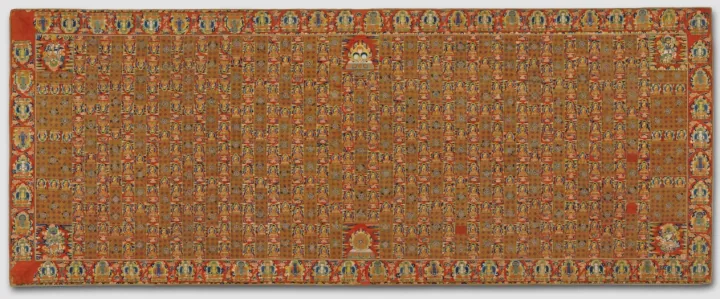
Border of a Shawl
The collection record classifies this work as textile. It is dated c. 1825–30. Recorded culture or place: India, Kashmir.
Explore the object recordOBJECT RECORD
A closer look at the details.
- Museum title
- Border of a Shawl
- Date
- c. 1825–30
- Culture / origin
- India, Kashmir
- Materials and technique
- wool: tapestry twill
- Dimensions
- Overall: 37.1 x 48.9 cm (14 5/8 x 19 1/4 in.); Mounted: 54.9 x 66.7 cm (21 5/8 x 26 1/4 in.)
- Artist / maker
- Not specified by the museum
- Museum
- The Cleveland Museum of Art
- Accession number
- 1925.500
FROM THE MUSEUM
In the museum’s words
The following description is reproduced from the Cleveland Museum of Art’s original English record.
Kashmiri shawls were extremely popular in the early 1800s, especially among foreigners to the Indian subcontinent. Made in the mountainous region of northwest India from wool from mountain goats from nearby Ladakh, the fabrics were especially prized for their softness and their beautiful symmetrical designs, often called paisley in English.
This textile fragment was once owned by Ananda Coomaraswamy (1877–1947), a Ceylonese (Sri Lankan) art historian and collector who is credited with introducing South Asian art to museums in the United States.
FOLLOW THE SOURCE
Text and image sources
The Cleveland Museum of Art · Purchase from the J. H. Wade Fund · CC0
The summary is based on public collection data. Refer to the museum’s latest record for the title, date and attribution.
Open the complete museum record View the open-access policyTHE VISITOR BOOK
What caught your eye?
Opening the visitor book…