OBJECT RECORD
把细节,慢慢看清。
- 馆方原名
- Oversize Hip Wrapper (tapis)
- 年代
- 中期-1700年代
- 文化 / 来源
- 印度,Coromandel Coast,mid-18th Century
- 材料与工艺
- 棉;plain weave;drawn resist,painted mordants,dyed
- 尺寸
- Overall: 296 x 120 cm (116 9/16 x 47 1/4 in.)
- 收藏机构
- 克利夫兰艺术博物馆
- 馆藏编号
- 2000.28
FROM THE MUSEUM
馆方怎样介绍它
以下为克利夫兰艺术博物馆英文原文,保留其原始表述。
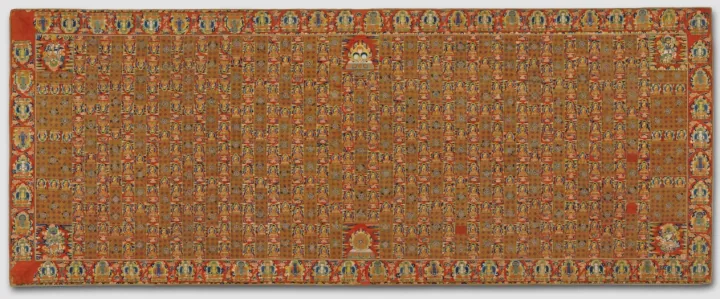
This colorful, elegantly patterned cloth was made in India for export to Indonesia in the East-West spice trade of the Dutch United East India Company. On the island of Sumatra such cloths, worn by both men and women, acquired ceremonial status, sometimes with magical and religious connotations. The pattern influenced local textile production, especially the heading at each end with triangles (kepala) on the deep red ground. The rich colors were a renowned hallmark of Indian cotton textiles, coveted in both Europe and the East. The Indian expertise in mordant patterning and dyeing was based on centuries of experience that foreigners sought in vain to duplicate. In 1734 a Frenchman, M. de Beaulieu, documented 11 stages of the labor-intensive process. It included applications of mordants (chemicals that fix dyes) that reacted in dye baths to produce specific colors; wax to keep desired areas white and dyed areas protected in subsequent dye baths; and bleaching in dung baths to lighten the ground.
THE VISITOR BOOK
看完了,留一点好奇。
正在打开留言簿…