馆藏档案 · 服饰织物
Classical Turkish Carpet with the Lotto Pattern
馆方将这件藏品归为织物。年代记录为1600–1650 年,文化或地区为土耳其。
查看馆藏资料OBJECT RECORD
把细节,慢慢看清。
- 馆方原名
- Classical Turkish Carpet with the Lotto Pattern
- 年代
- 1600–1650 年
- 文化 / 来源
- 土耳其,Ushak,Ottoman period
- 材料与工艺
- wool: symmetrical rug knot
- 尺寸
- Overall: 172.1 x 104.1 cm (67 3/4 x 41 in.)
- 收藏机构
- 克利夫兰艺术博物馆
- 馆藏编号
- 2015.61
FROM THE MUSEUM
馆方怎样介绍它
以下为克利夫兰艺术博物馆英文原文,保留其原始表述。
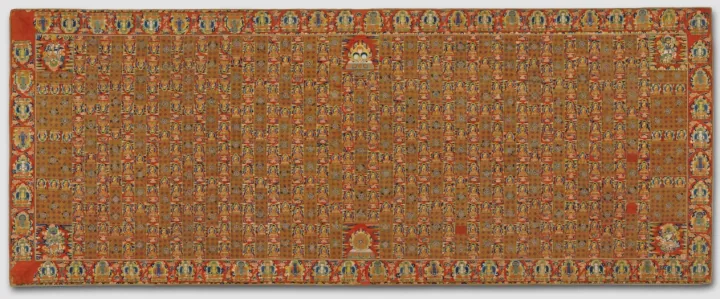
Lotto carpets have consistent color combinations and striking designs traceable to sources in Central Asia. In the central field, stylized yellow leaf patterns stand out against a red ground. The border is filled with cartouches on a dark blue background, and a simplified vine meanders along the outermost edge. In Islamic contexts, these vegetal patterns evoke paradise.
Made primarily for export in the western Turkish center of Ushak between the 1400s and 1600s, Lotto carpets were named after the Venetian painter Lorenzo Lotto (1480–1556), who amply documented in oil paintings the way Europeans displayed this type of Turkish carpet as a sign of wealth and prestige. To preserve them, Europeans displayed Lotto carpets on tables, though they were originally made for use on the floor.
THE VISITOR BOOK
看完了,留一点好奇。
正在打开留言簿…