OBJECT RECORD
把细节,慢慢看清。
- 馆方原名
- Fragment
- 年代
- 1975年以前
- 文化 / 来源
- 伊朗 or Iraq,in the style of the Buyid period (945–1055) or Seljuq period (1037–1194)
- 材料与工艺
- Silk: lampas weave
- 尺寸
- Overall: 38.5 x 67 cm (15 3/16 x 26 3/8 in.)
- 收藏机构
- 克利夫兰艺术博物馆
- 馆藏编号
- 1975.38
FROM THE MUSEUM
馆方怎样介绍它
以下为克利夫兰艺术博物馆英文原文,保留其原始表述。
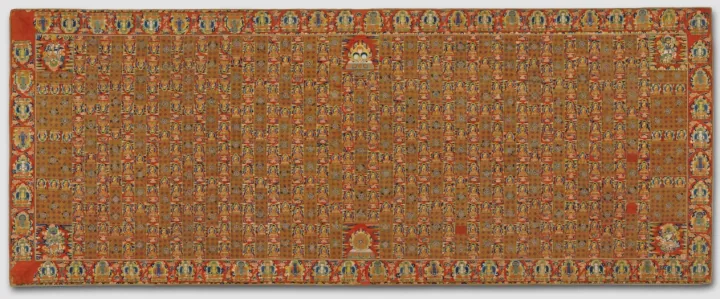
This silk was originally reported to be one of several fragments from garments, shroud, and tomb covers unearthed during the early 1900s at Bibi Shahr Banu outside the ancient city of Rayy, a few miles from Tehran. The fragment preserves a beginning (or finishing) edge at the bottom and a small portion of selvage along the left edge.
The exceptionally beautiful design of this silk is filled with ornament. Even the spaces between the roundels containing birds and palmette trees and the octagons with inscriptions enclosing floral devices are ornamented with an intricate geometric pattern. Islamic art is, above all, decorative in accordance with Muhammed's dislike of representing living forms. In Iran, floral and animal motifs never ceased to be represented even after the Islamic invasion, but they were depicted in a highly ornamental fashion as seen here.
THE VISITOR BOOK
看完了,留一点好奇。
正在打开留言簿…