Collection record · Belief & ritual
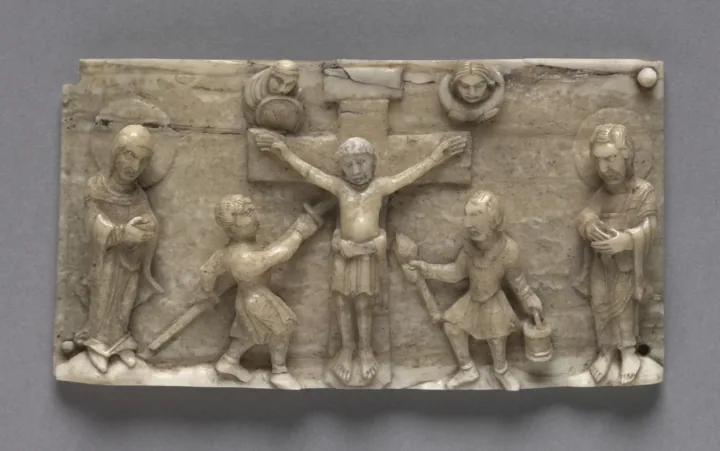
Portable Altar
The collection record classifies this work as ivory. It is dated c. 1200–1220. Recorded culture or place: Germany, Cologne.
Explore the object recordOBJECT RECORD
A closer look at the details.
- Museum title
- Portable Altar
- Date
- c. 1200–1220
- Culture / origin
- Germany, Cologne
- Materials and technique
- walrus ivory, gilded copper, porphyry, champlevé enamel, wood core
- Dimensions
- Overall: 13.1 x 26.9 x 16.9 cm (5 3/16 x 10 9/16 x 6 5/8 in.)
- Artist / maker
- Not specified by the museum
- Museum
- The Cleveland Museum of Art
- Accession number
- 1927.29
FROM THE MUSEUM
In the museum’s words
The following description is reproduced from the Cleveland Museum of Art’s original English record.
The principal decoration of this portable altar is carved of walrus ivory. On the long sides are traditional figures of standing apostles. On the short sides are the seated Virgin with the Magi, and Christ the Judge between the symbols of the Evangelists. The commercial ties between the Rhineland and the Norse peninsula made walrus ivory easily available to the city of Cologne, one of the most important artistic centers in medieval Germany.
FOLLOW THE SOURCE
Text and image sources
The Cleveland Museum of Art · Purchase from the J. H. Wade Fund · CC0
The summary is based on public collection data. Refer to the museum’s latest record for the title, date and attribution.
Open the complete museum record View the open-access policyTHE VISITOR BOOK
What caught your eye?
Opening the visitor book…