OBJECT RECORD
把细节,慢慢看清。
- 馆方原名
- Miniature Stone Reliquary or Toilette Casket
- 年代
- 公元1–100 年
- 文化 / 来源
- Pakistan,Gandhara,probably Sirkap,early Kushan period
- 材料与工艺
- gray schist
- 尺寸
- Diameter: 4 cm (1 9/16 in.); Overall: 4.2 cm (1 5/8 in.)
- 收藏机构
- 克利夫兰艺术博物馆
- 馆藏编号
- 1977.64
FROM THE MUSEUM
馆方怎样介绍它
以下为克利夫兰艺术博物馆英文原文,保留其原始表述。
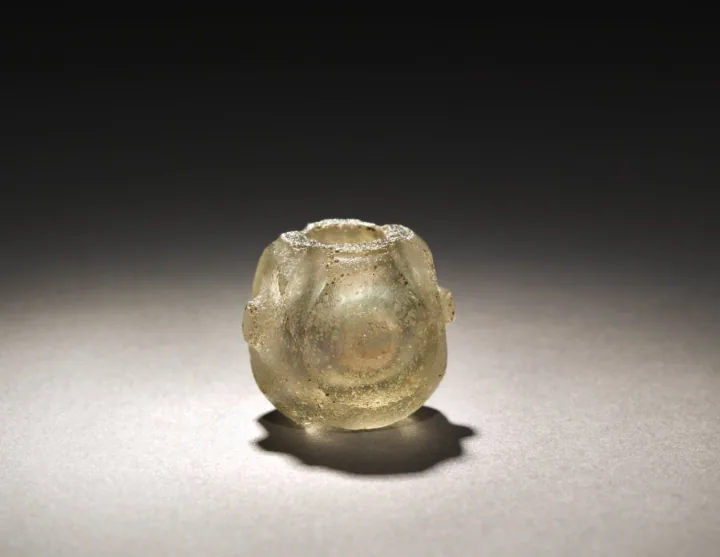
Tiny reliquaries holding the cremated remains of the Buddha or a high-ranking holy person empowered monuments and made them sacred. A Buddhist monument, such as the solid hemispherical mounds called stupas, would not be worshipped until it was consecrated with the relic secreted inside. Bits of ash were combined with tiny gems inside a crystal or glass reliquary, which was then placed inside a stone or metal container, like the lidded versions seen here. These containers look like cosmetic vessels for aromatic pastes used for perfume in ancient India. Buddhist texts state that the enlightened Buddha emitted a fragrance like sandalwood paste; the form of the reliquary as a perfume bottle indicates the presence of the Buddha by the visual reference to his pleasant scent. Once enclosed in the stupa the reliquaries would not be seen, but monks were tasked with applying sandalwood paste to the exterior of stupas as part of their regular maintenance to convey to visitors the ongoing presence of the Buddha radiating from the relic in the center.
THE VISITOR BOOK
看完了,留一点好奇。
正在打开留言簿…