Collection record · Belief & ritual
Miniature Stone Reliquary or Toilette Casket
The collection record classifies this work as sculpture. It is dated 1–100 CE. Recorded culture or place: Pakistan, Gandhara, probably Sirkap, early Kushan period.
Explore the object recordOBJECT RECORD
A closer look at the details.
- Museum title
- Miniature Stone Reliquary or Toilette Casket
- Date
- 1–100 CE
- Culture / origin
- Pakistan, Gandhara, probably Sirkap, early Kushan period
- Materials and technique
- gray schist
- Dimensions
- Diameter: 4 cm (1 9/16 in.); Overall: 4.2 cm (1 5/8 in.)
- Artist / maker
- Not specified by the museum
- Museum
- The Cleveland Museum of Art
- Accession number
- 1977.64
FROM THE MUSEUM
In the museum’s words
The following description is reproduced from the Cleveland Museum of Art’s original English record.
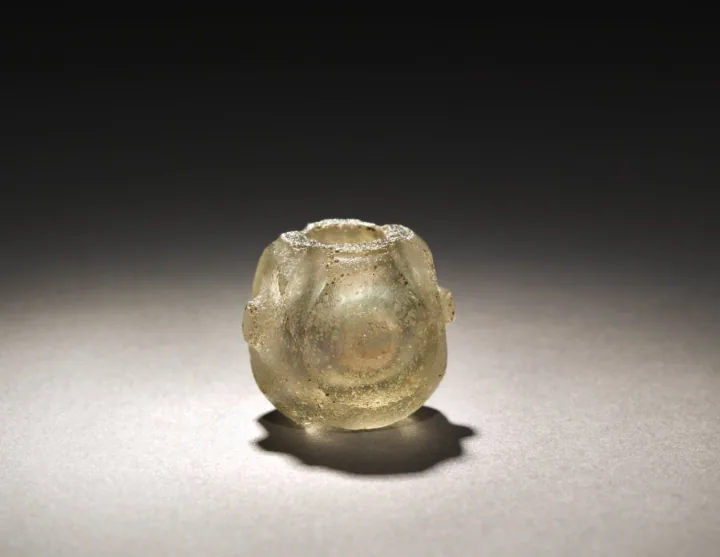
Tiny reliquaries holding the cremated remains of the Buddha or a high-ranking holy person empowered monuments and made them sacred. A Buddhist monument, such as the solid hemispherical mounds called stupas, would not be worshipped until it was consecrated with the relic secreted inside. Bits of ash were combined with tiny gems inside a crystal or glass reliquary, which was then placed inside a stone or metal container, like the lidded versions seen here. These containers look like cosmetic vessels for aromatic pastes used for perfume in ancient India. Buddhist texts state that the enlightened Buddha emitted a fragrance like sandalwood paste; the form of the reliquary as a perfume bottle indicates the presence of the Buddha by the visual reference to his pleasant scent. Once enclosed in the stupa the reliquaries would not be seen, but monks were tasked with applying sandalwood paste to the exterior of stupas as part of their regular maintenance to convey to visitors the ongoing presence of the Buddha radiating from the relic in the center.
FOLLOW THE SOURCE
Text and image sources
The Cleveland Museum of Art · Bequest of Elizabeth B. Blossom · CC0
The summary is based on public collection data. Refer to the museum’s latest record for the title, date and attribution.
Open the complete museum record View the open-access policyTHE VISITOR BOOK
What caught your eye?
Opening the visitor book…